
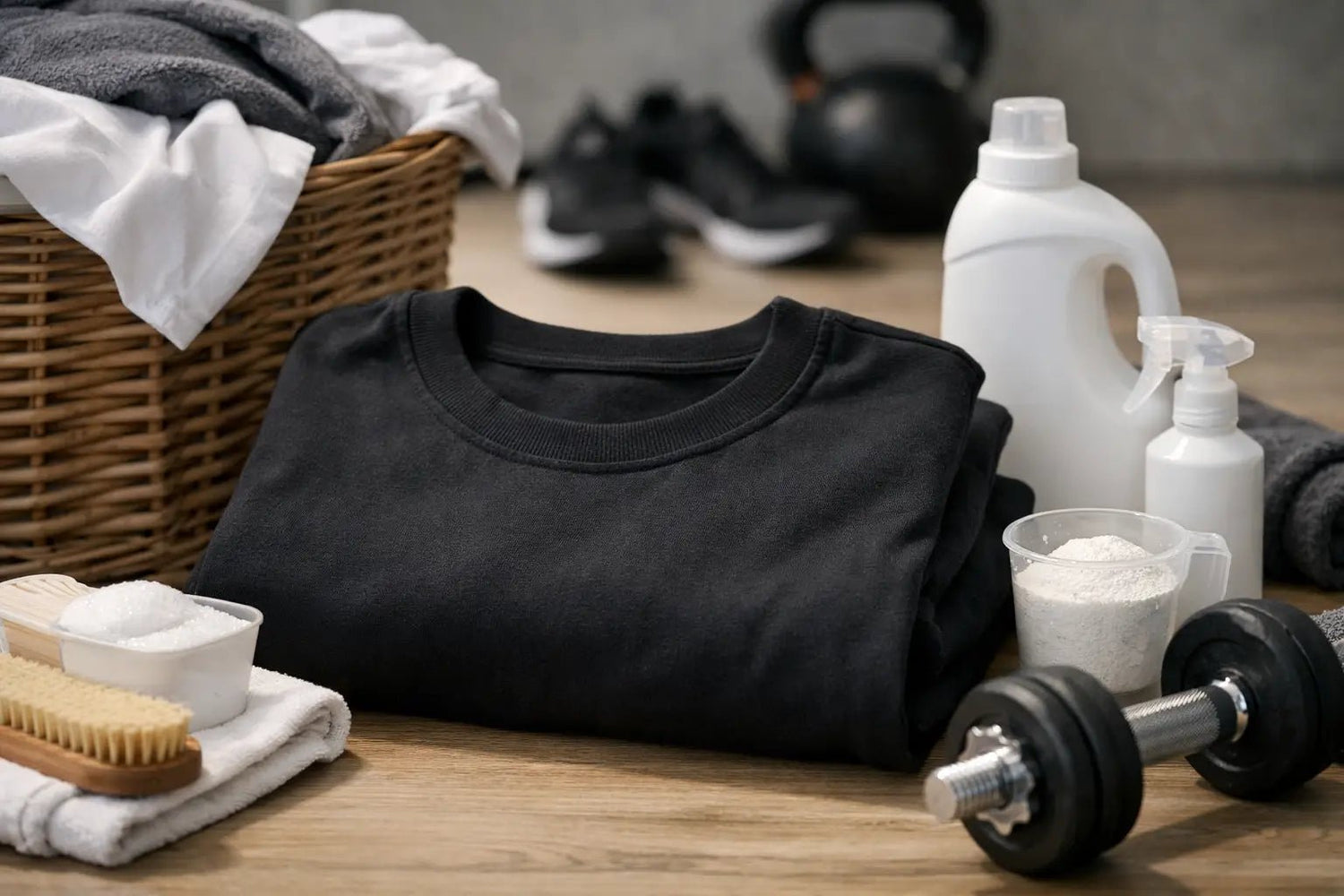
A heavy shirt can take a lot in the gym — but not bad care. That’s exactly why a real heavyweight t shirt care guide for gymwear doesn’t need watered-down basics. It needs clear rules. If you’re into oversized shirts made from heavy cotton, you want substance, drape, and presence. Heat, bad washing habits, and careless handling kill that faster than most people think.
Heavyweight T Shirt Care Guide for Gymwear — what actually matters
Heavyweight gym streetwear isn’t just thicker fabric. It wears different. It falls different. It ages different too. A lightweight shirt will often survive a bad wash somehow. A heavy oversized shirt shows every care mistake straight away — warped collar, stiff fibers, dull color, or a fit that suddenly looks more like a bad buy than a statement.
Then there’s the gym itself: sweat, deodorant residue, body oil, and sometimes chalk end up in the fabric. Ignore that or beat it up in the machine, and it’s not just the look that suffers. Over time, the fabric loses its hand feel, the surface can turn rough, and the shape starts to break down. If you buy premium, treat it that way. Zero bullshit.
Why heavy cotton needs different care
Heavyweight shirts are usually made from dense, heavy-knit cotton. That’s what gives them that rich look and solid oversized silhouette. At the same time, this fabric holds more moisture than an ultra-light shirt. Meaning: it needs more patience when drying and more control when washing.
The second point is the shape. Especially with boxy and oversized fits, the silhouette is part of the design. If the shoulders start to sag, the hem twists, or the collar goes limp, it’s not just the shirt that takes a hit — the whole look loses edge. If you wear gym x streetwear, half a presence isn’t enough.
The biggest mistake: too hot, too rough, too often
A lot of people treat every shirt the same. 60 degrees, full spin, dryer on full blast. Sounds efficient. It’s poison for heavy cotton. High heat shrinks fibers, strong friction wears down the surface, and aggressive cycles put unnecessary stress on prints, seams, and collars.
That doesn’t mean you need to handle every piece like a museum artifact. But you do need a system. Discipline in training only means something if you show it with your gear too.
How to wash your heavyweight shirt the right way
Turn the shirt inside out before washing. That protects the outside, especially the color, surface, and any prints. Wash it at 30 degrees on a gentle or delicate cycle unless the care label says otherwise. For normally dirty gymwear, that’s more than enough in most cases.
What goes into the drum with it matters too. Zippers, rough fabrics, or heavy towels create unnecessary friction. Ideally, a heavyweight shirt should be washed with similar colors and similar materials. Not with whatever else happens to fit in the basket.
When it comes to detergent: less ego, more common sense. A mild color detergent is usually the better call than a harsh universal detergent. Bleach has no place in dark or rich streetwear with attitude. Fabric softener sounds comfortable, but it can stress the fiber structure and ruin the hand feel over time. Especially with high-quality gymwear, it’s usually an unnecessary move.
How often makes sense?
After a hard push day with a lot of sweat? Wash it. After wearing it casually for a short time with no real strain? Airing it out might be enough. Not every session outside the gym means it has to go straight into the machine. Washing too often stresses the fabric just as much as washing too rarely.
So it depends. If you actually use a shirt as gymwear, take hygiene seriously. If you wear it more as an oversized streetwear piece, airing it out properly between washes can help it last longer.
Drying without losing shape
A dryer is usually a bad idea for heavy cotton shirts. Especially on a regular basis. Heat is one of the fastest ways to get shrinkage, hardened fibers, and a collar that loses its structure. If you want to keep that rich, clean drape, air-dry the shirt.
Best move: reshape it lightly right after washing. Don’t yank it. Don’t wring it out. Just straighten the shoulders, sleeves, and hem properly. Then let it dry flat or on a wide hanger, depending on the material and weight. A thin wire hanger can warp the shoulder area. Looks cheap. Easy to avoid.
Sunlight matters too. Direct, harsh sun can fade colors faster. Especially with black, washed, or deeply pigmented shades, drying in the shade is worth it. If you care about strong looks, don’t give away the color for free.
Heavyweight T Shirt Care Guide for Gymwear: color and fit
If you want a shirt to hit the same after months, you need to protect the color and fit on purpose. With dark colors, that means washing inside out, keeping the temperature low, and not roasting it in the sun. With oversized fits, it means no brutal drying programs and no overstuffed machine.
The collar deserves extra attention. It’s often the first thing that gives away a badly cared-for shirt. A solid neckline keeps the look clean and heavy. So when you take the shirt off, don’t drag it backward by the collar in that post-workout tunnel vision. Grab it from the bottom or the sides instead. Sounds small. Makes a difference over time.
What about ironing?
If the shirt is hung up properly and dried in shape, you often won’t need to iron it at all. If you do, turn it inside out and use medium heat. Too much heat flattens the texture and can damage prints. Steam can help, but the rule still stands: controlled, not maxed out.
A slightly rugged look suits heavyweight gym streetwear better anyway than lifeless perfection pressed flat. The fabric should have presence, not look overly polished.
Stains, odors, and typical gym problems
Sweat marks, deodorant streaks, and that typical training smell aren’t the exception. They’re reality. What matters is how fast you react. Don’t leave a sweaty shirt crumpled up in your bag for days. That pushes odors deeper into the fabric and makes the whole thing harder than it needs to be.
If a shirt is damp after training, hang it up first. Then wash it — not straight into a closed laundry basket under your other stuff. For deodorant stains, quick pre-treatment with a little water and mild detergent is often enough. Don’t scrub like crazy. That can rough up the surface, especially with heavy cotton.
Stubborn odors are often a sign that you washed too cold, too short, or with too much detergent. Yeah, too much detergent is a problem. Residue stays in the fabric, traps odors, and leaves the shirt looking dull over time. More doesn’t help more. More just makes a mess.
Storage: small detail, big decision
Care doesn’t end after drying. How you store your shirt affects the shape and look too. Heavier shirts can stretch out on a hanger over time, especially if the hanger doesn’t match the shoulder shape. Folding them in the closet is often the better option if you want to keep the silhouette stable.
Make sure your pieces are stored clean and fully dry. Sounds basic, but it’s one of the reasons shirts end up smelling musty or developing mildew spots. If you take your setup seriously, you don’t store it like dead stock.
When a shirt isn’t worn out — it’s got character
Not every change is a flaw. Heavy cotton lives. After several washes, the hand feel often gets a little softer, the shirt settles, and the look picks up character. That’s normal — and for a lot of people, it’s exactly what they want. What matters is that the shape stays solid and the fabric doesn’t break down like cheap stuff.
That’s the line between honest patina and bad care. A shirt can look lived in. It just shouldn’t look abandoned.
If you wear high-quality gymwear, you don’t want to start from zero every season. With the right care, a heavyweight shirt stays heavy longer, keeps a clean fit, and holds onto its strong presence. So if you invest in good fabric, handle it that way. Strength doesn’t only show in a set on the bench. It shows in how you hold your standards — even in the laundry.
