
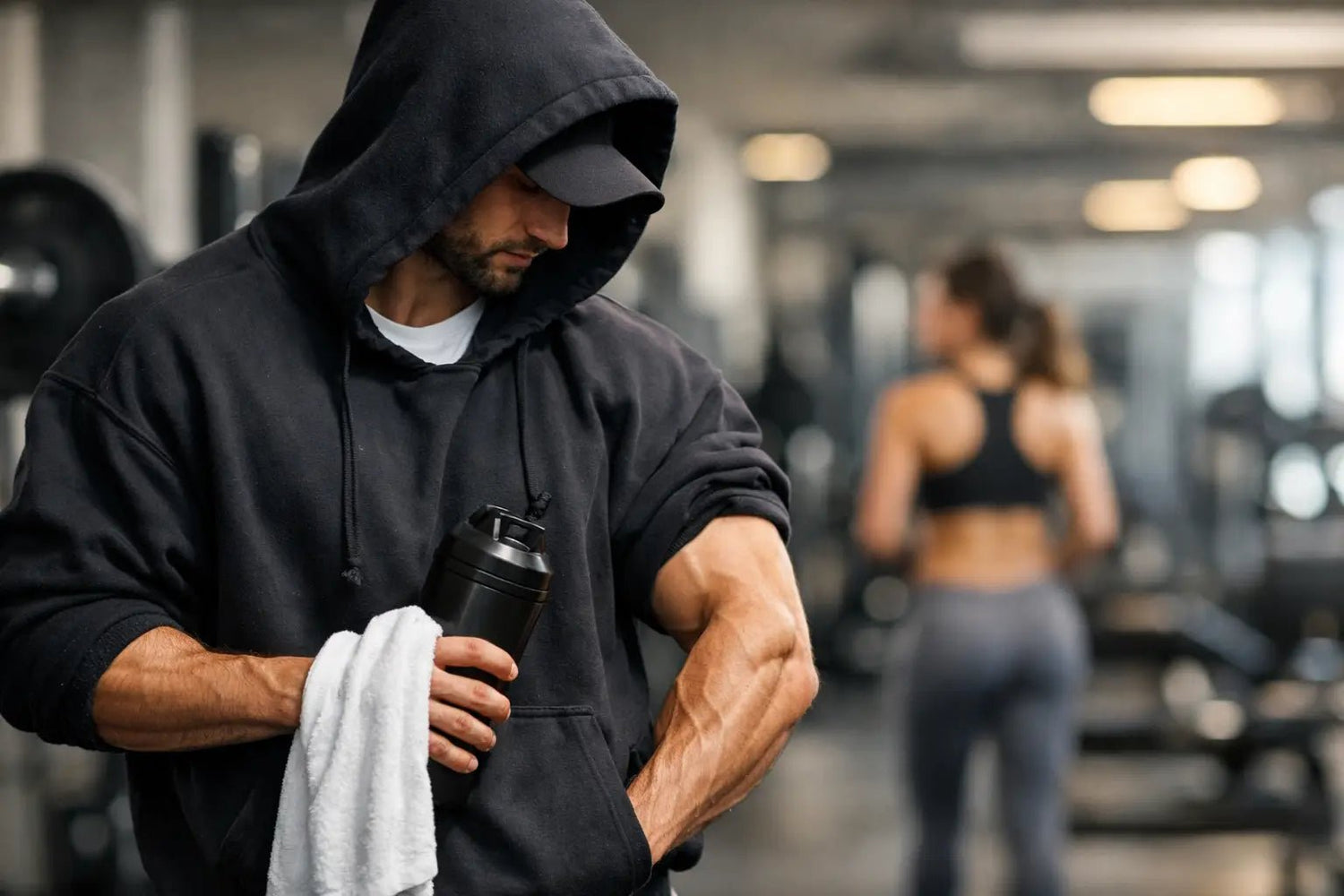
You walk into the gym. Hoodie or oversized tee sitting loose. Focus locked in. Eyes forward. No showing off yet. No posing. Work comes first. That’s exactly why so many people wear a pump cover—not as a gimmick, but as part of their mindset.
When should you wear a pump cover—and why at all?
Short answer: mainly before training and during the first phase of your session. That’s when you’re warming up, locking in, and your body isn’t fully fired up yet. A pump cover is usually an oversized shirt, hoodie, or sleeveless top with a loose fit that you wear over your actual gym fit.
And it’s not just about the look. Sure, the style has its place in the gym and in streetwear with attitude. But if you train seriously, you know this: a pump cover can help you stay focused, keep your body warm, and stop every session from turning into a stage show. Put in the work first. Show it later.
That’s why the question “when should you wear a pump cover” isn’t just about style. It depends on how you train, how warm the gym is, what kind of session you’re doing, and whether you care more about focus or maximum freedom of movement.
Before training: a strong move
Before your first set, a pump cover usually makes the most sense. Your body isn’t fully warm yet, your muscles and joints are only just waking up, and you don’t want to go into your first heavy lift half cold. A heavyweight oversized tee or a hoodie keeps your muscles warm longer, especially on colder days or in gyms with heavy air conditioning.
Then there’s the mental side. A pump cover creates distance. You’re locked in, not on display. No constant checking. No pointless flexing. No distractions. You walk in, handle your work, and let the training speak for itself.
It makes even more sense on push days, upper-body days, or arm days. A lot of people only take the cover off once the pump hits and the session is really rolling. That’s the moment. Not before.
During training: depends on the session
Whether you keep your pump cover on for the whole session depends on the workload. For heavy compound lifts like squats, bench press, or rows, a loose oversized shirt can work really well. It doesn’t get in the way, gives you room to move, and still keeps that compact, focused vibe.
It’s different with very intense sessions—high heat, long hypertrophy workouts, or lots of cardio in between. If you’re sweating hard, fabric that’s too heavy will start holding you back. Then focus turns into overheating fast. Zero bullshit: not every fabric is built for every session.
That’s why a good pump cover needs to fit loose without looking completely shapeless. It should have weight, but not bury you. Especially with oversized streetwear fits, the difference between “hangs heavy” and “looks like a tent” matters. The look should have presence, not look sloppy.
When should you wear a pump cover for different training goals?
This is where it gets more specific. If you train for strength, a pump cover usually stays useful longer into the session. Rest breaks are longer, the strain comes in bursts, and staying warm helps more. Especially for shoulder, chest, and back work, that can be a real advantage.
If you train for bodybuilding and chase the pump, the timing is usually different. A lot of people wear the cover through the first half, then take it off once the muscle, tension, and shape start showing. That’s not random. That transition is part of gym culture. Build first. Reveal later.
For functional sessions, circuit training, or cardio-heavy workouts, a pump cover is usually more for the warm-up, the trip there, and the cooldown. Once your heart rate and body temperature climb, you usually want less fabric, not more.
The mental side gets underrated
Most people talk about the look. But the real point is often what it does to your head. For a lot of people, a pump cover is like a switch. As long as it’s on, you’re in the tunnel. No comparing yourself. No constantly checking the mirror. No performance theater.
Especially on days when you’re not feeling 100 percent, that can be gold. Not every training day is a PR. Not every day is camera-ready. A pump cover takes pressure off without lowering your standards. You don’t need to look perfect. You need to perform.
That’s also why this trend isn’t just disappearing again. It hits a nerve. Gymwear stopped being purely functional a long time ago. It’s an attitude. And a good pump cover sends a clear message: I’m not here to look nice. I’m here for the grind.
When you’re better off skipping it
As strong as the fit looks, there are moments when a pump cover just isn’t the best call. On very hot summer days, in badly ventilated gyms, or during fast-paced sessions, a heavy top can be too much. And when performance drops, style stops mattering.
The same goes for technical exercises where you need a lot of body tension and movement feedback. Too much fabric can get annoying. If you need to see how your shoulder blade, arm angle, or core are working during certain lifts, less can be better. Not out of vanity—for cleaner execution.
And then there’s the fit itself. A pump cover only works when it’s intentionally oversized—not just too big. Sleeves that are too long, weak shoulder seams, or thin fabric kill the whole effect straight away. Then it doesn’t look powerful. It just looks clueless.
Which pump cover works for which moment?
For a lot of people, a heavyweight oversized shirt is the safest all-rounder. It works for the warm-up, the first heavy sets, and often for the whole session too. It’s not as warm as a hoodie, but it has enough substance to look like a real pump cover.
An oversized hoodie hits harder on cold days, on the way to the gym, and in sessions where it takes you a while to warm up. For brutal leg days or packed summer gyms, it can turn into too much fast. But the vibe is hard to beat.
Sleeveless pump covers sit somewhere in between. You get more air and more freedom to move, but you still keep that loose silhouette. Especially if you don’t want to fully hide your shoulders and arms but still want that raw oversized look, this can be the right move.
If you’re into durable, heavyweight fabrics and don’t want to separate gym streetwear from everyday style, you’ll usually end up with pieces built exactly for that—clean fit, real weight, no cheap shell. https://jawx.de/ shows pretty clearly what that approach can look like.
Wear a pump cover in everyday life? Yes—if the fit is right
The term comes from the gym, but these pieces have been working outside of it for a long time too. A strong oversized tee or a hoodie with a clean cut works just as well in the city, on the way to training, or on rest days. That’s part of the appeal too: you’re not switching between two identities. You stay the same person.
The only thing that matters is that it shouldn’t look like pure performance wear. If the fabric and cut are high quality, the look feels intentional. If not, it gives changing-room energy. Streetwear with attitude needs presence—and quality.
What really matters in the end
If you’re asking yourself, “when should you wear a pump cover?”, the honest answer is simple: whenever it serves your training. Not because TikTok says so. Not because someone else in the gym is wearing one. But because it gives you focus, keeps you warm, upgrades your fit, or just matches your mode better.
There’s no rule saying you have to take it off mid-workout. And there’s no rule saying you should only wear it at the start. Some keep it on until the last set. Others take it off after the warm-up. Both are fine, as long as it fits your training—not just the show.
Training clothes aren’t some side issue. They affect how you move, how you feel, and how seriously you take your session. If your pump cover helps you switch into that mode, wear it. If it holds you back, leave it off. Simple as that.
In the end, it’s not about when a trend gets worn. It’s about when you’re ready to flip the switch—and then put in the work with no excuses.
